5th EOSC SOA General Assembly: Austria’s Path to an EOSC Node
On 18 November 2025, the EOSC Support Office Austria held its 5th General Assembly at TUtheSky, TU Wien, in Vienna. Alongside regular agenda items – such as reviewing the past period and electing EOSC SOA positions and Working Groups – participants received the latest updates on the status of an EOSC Node Austria and discussed potential next steps for its development.
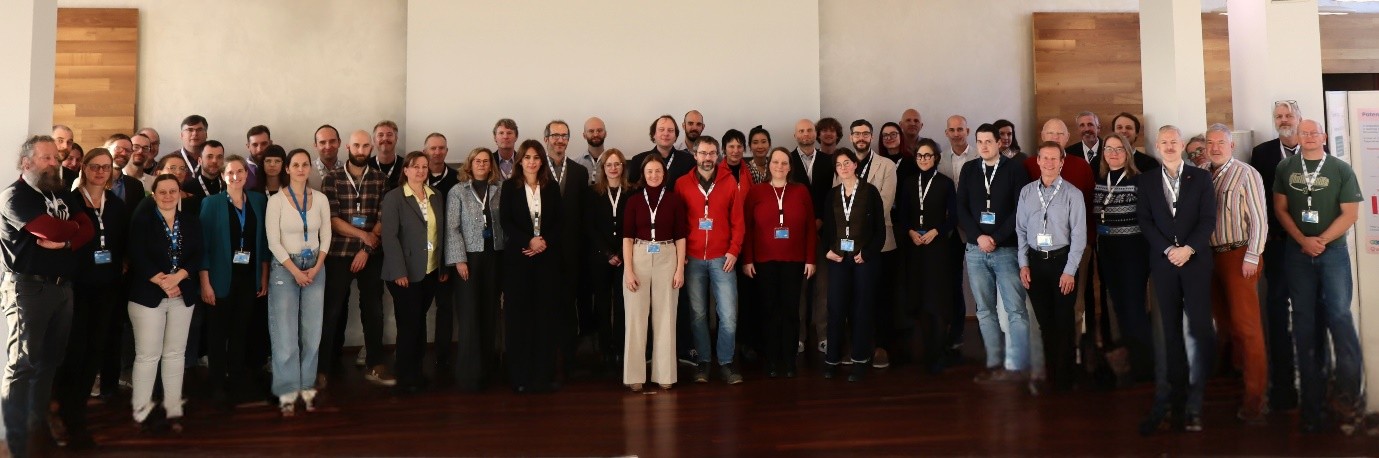
Vice Rector Wolfgang Kastner, together with Ilire Hasani-Mavriqi, the first Chair of the General Assembly, opened the 5th EOSC SOA General Assembly, highlighting how EOSC will shape research infrastructures for decades ahead by advancing FAIR-based standards and promoting community-driven governance. This set the stage for presentations by Petra Karlhuber, Secretary General of the ACONET Association, and Barbara Sánchez, then acting Chair of the EOSC SOA Management Board, who shared the ACOnet 2030 Vision and a year-in-review report: Petra Karlhuber presented outlining plans to establish a NREN with inclusive governance. The roadmap includes expanding ACOmarket from eight to all 22 public universities, followed by a broader rollout to all research institutions and universities.
Barbara Sánchez delivered the year in review, highlighting the addition of five new partners in 2025 – namely, EODC, BOKU, PLUS, ÖAW, and IT:U – and ongoing preparations for an EOSC Austria Node, initiated with a coordinated discussion in July involving the BMFWF, the ACONET Association, and the EOSC SOA Steering Committee. A detailed activity report covering these topics is available for download on Zenodo: https://zenodo.org/records/17462453
During the elections, key EOSC SOA positions were filled: Ilire Hasani-Mavriqi (Graz University of Technology) was re-elected as Chair of the General Assembly, with Peter Kraker (OKMaps) as second Chair. Dimitri Prandner (JKU) took over as Chair of the Management Board, and Miguel Rey Mazon (Graz University of Technology) and Lisa Hönegger (University of Vienna) joined the Management Board as new members.
In addition, the Working Group (WG) Researcher Engagement in Austria officially concluded its activities, while the General Assembly approved the creation of the new WG Needs from the Austrian Research Communities. It aims to engage and onboard diverse EOSC SOA partners to act as multipliers, identify concrete application areas for EOSC services in research and education, and gather evidence-based insights on needs, gaps, and required actions. It will also foster knowledge exchange and capacity building within Austria’s open science community. Those interested in participating are encouraged to contact the coordinators, Dimitri Prandner (dimitri.prandner@jku.at) and Stefan Reichmann (stefan.reichmann@tugraz.at).
Building the EOSC Federation
The latter part of the General Assembly was dedicated to the growth of the EOSC Federation. Bob Jones, EOSC Association, introduced the first 13 Candidate Nodes along with the EOSC EU Node, marking the Federation’s initial formation. These Nodes include a diverse mix of national, thematic, and e-infrastructure organisations, and their governance and operational framework is formalized through a dedicated Memorandum of Understanding (MoU). A second round of Node onboarding is anticipated in early 2026, supported by EOSC Gravity cascading grants, Horizon INFRA calls, and further recruitment opportunities later in the year.
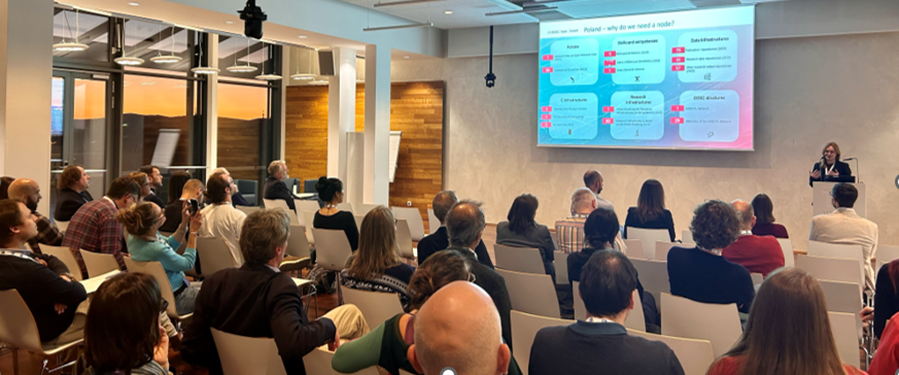
Aneta Pazik-Aybar, NCN Poland, showcased the Polish EOSC Node as a practical example. Poland’s Node benefits from a well-established national policy for open research data, a network of 29 participating institutions, and a federated governance approach aligned with EOSC and European-level developments.
The session concluded with Ilire Hasani-Mavriqi and Stefan Hanslik, BMFWF, providing updates on Austria’s progress. Austria already possesses a strong foundation in research data infrastructure, FAIR and Open Science practices, and data stewardship initiatives. While the formal legal entity for an Austrian EOSC Node has yet to be determined, the EOSC SOA has been designated to coordinate its development. A detailed roadmap is underway to align Austria’s approach with the EOSC Federation’s requirements, targeting the 18 February 2026 deadline for the next enrolment, whether through a full Node application or a preparatory grant. The process will also involve consultations with EOSC SOA partners, Austrian research institutions, and existing Nodes to assess their level of interest and support for Austria’s application.
The 5th EOSC SOA General Assembly demonstrated Austria’s strong commitment to defining its role within the developing EOSC Federation. The coming months will be crucial in turning this momentum into a coordinated national effort to establish an Austrian EOSC Node.
Presentation slides from the General Assembly are available at: https://zenodo.org/records/17699509