Bringing EOSC Task Force Outcomes to the Austrian RDM Community
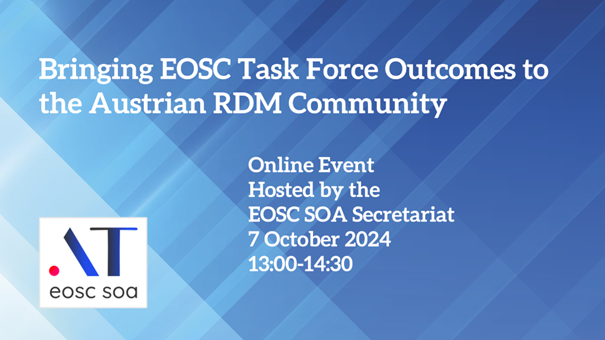
On the 7th of October 2024 the EOSC Support Office Austria hosted a webinar to share the outcomes of the former Task Forces. The aim was to inform the community about the achievements
FAIR Implementation Workshop: National Level Impact on FAIR – Introduction of the Austrian EOSC Mandated Organisation and the national FAIR initiatives The Austrian EOSC Mandated Organisation and the national FAIR initiatives were introduced in the FAIR Implementation Workshop on National Level Impact on FAIR on the 1 October 2024. Ilire Hasani-Mavriqi, first speaker of the EOSC SOA General Assembly, was invited to give a keynote. She presented the Austrian Open Science and FAIR landscape and our initiatives such as EOSC SOA and Cluster Research Data as best practice examples of how to create FAIR implementation plans at the national level.
UNESCO has set up five working groups, each targeting key impact areas crucial for implementing the UNESCO Recommendation on Open Science (OS) adopted on 23 November 2021. While the Recommendation affirmed the importance of open science as a vital tool to improve the quality and accessibility of both scientific outputs and scientific processes, these working groups brought together experts and open science entities from various fields and domains to address distinct yet interconnected topics and challenges essential to the implementation of the Recommendation.
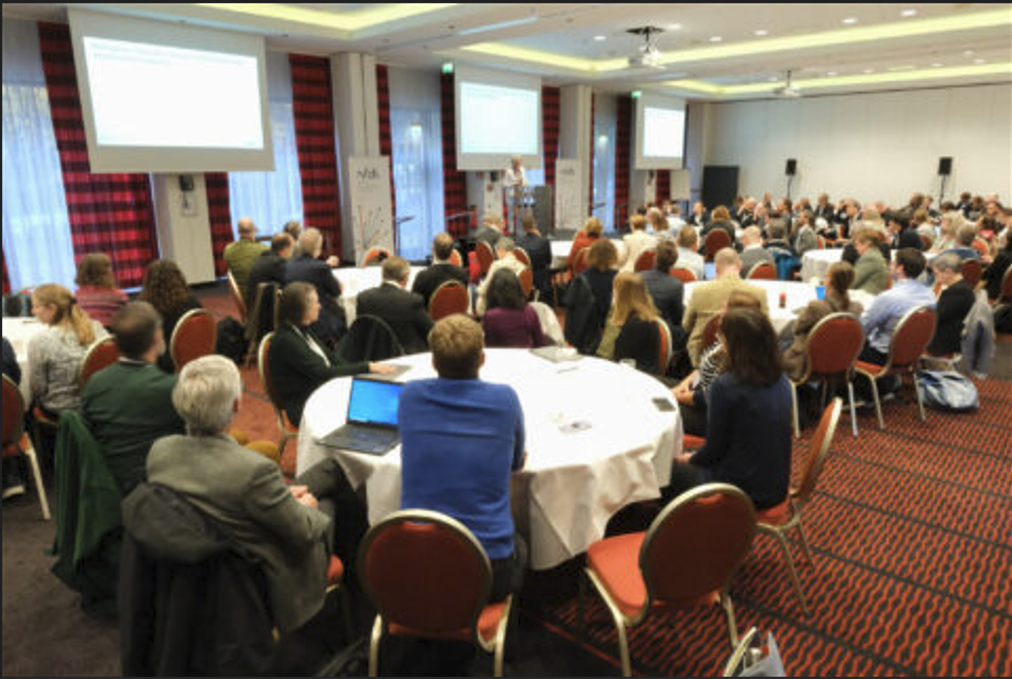
The FAIR-IMPACT National Roadshow visited Austria on June 18th. This event was hosted by the Graz University of Technology (TU Graz) as part of “Shared RDM Services & Infrastructure” project. Around 50 participants from Austria and beyond joined to explore the latest advancements in Open Science within the country and to learn about outcomes from EOSC-related projects, including FAIR-IMPACT.
An expert group of the EOSC Steering Board (EOSC-SB), the Policy Sub-Group, in collaboration with the ESFRI-EOSC Coordination Task Force wrote two opinion papers analysing a set of key disruptive concepts and practices connected to the construction and future operation of EOSC. The partnership is further enhanced by the participation of the Swiss Library Service Platform (SLSP), the operator of Switzerland’s national library platform, swisscovery, which will bring Open Knowledge Maps visualisations to over 500 libraries. This widespread support from the Swiss research community will strengthen Open Knowledge Maps and its open infrastructure as a part of the European Open Science Cloud (EOSC).
UNESCO Working Group on Open Science Funding and Incentives Policy and Policy Instruments UNESCO has set up five working groups, each targeting key impact areas crucial for implementing the UNESCO…
The Consortium of Swiss Academic Libraries (CSAL) has signed a membership for Open Knowledge Maps on behalf of nine of its members, in an agreement bringing AI-driven visual discovery to researchers and research institutions across Switzerland. The partnership is further enhanced by the participation of the Swiss Library Service Platform (SLSP), the operator of Switzerland’s national library platform, swisscovery, which will bring Open Knowledge Maps visualisations to over 500 libraries. This widespread support from the Swiss research community will strengthen Open Knowledge Maps and its open infrastructure as a part of the European Open Science Cloud (EOSC).
UNESCO has set up five working groups, each targeting key impact areas crucial for implementing the UNESCO Recommendation on Open Science (OS) adopted on 23 November 2021. While the Recommendation affirmed the importance of open science as a vital tool to improve the quality and accessibility of both scientific outputs and scientific processes, these working groups brought together experts and open science entities from various fields and domains to address distinct yet interconnected topics and challenges essential to the implementation of the Recommendation.